Terragrunt Stacks 与 Infrastructure-Live:account/region 分层与自动依赖解析
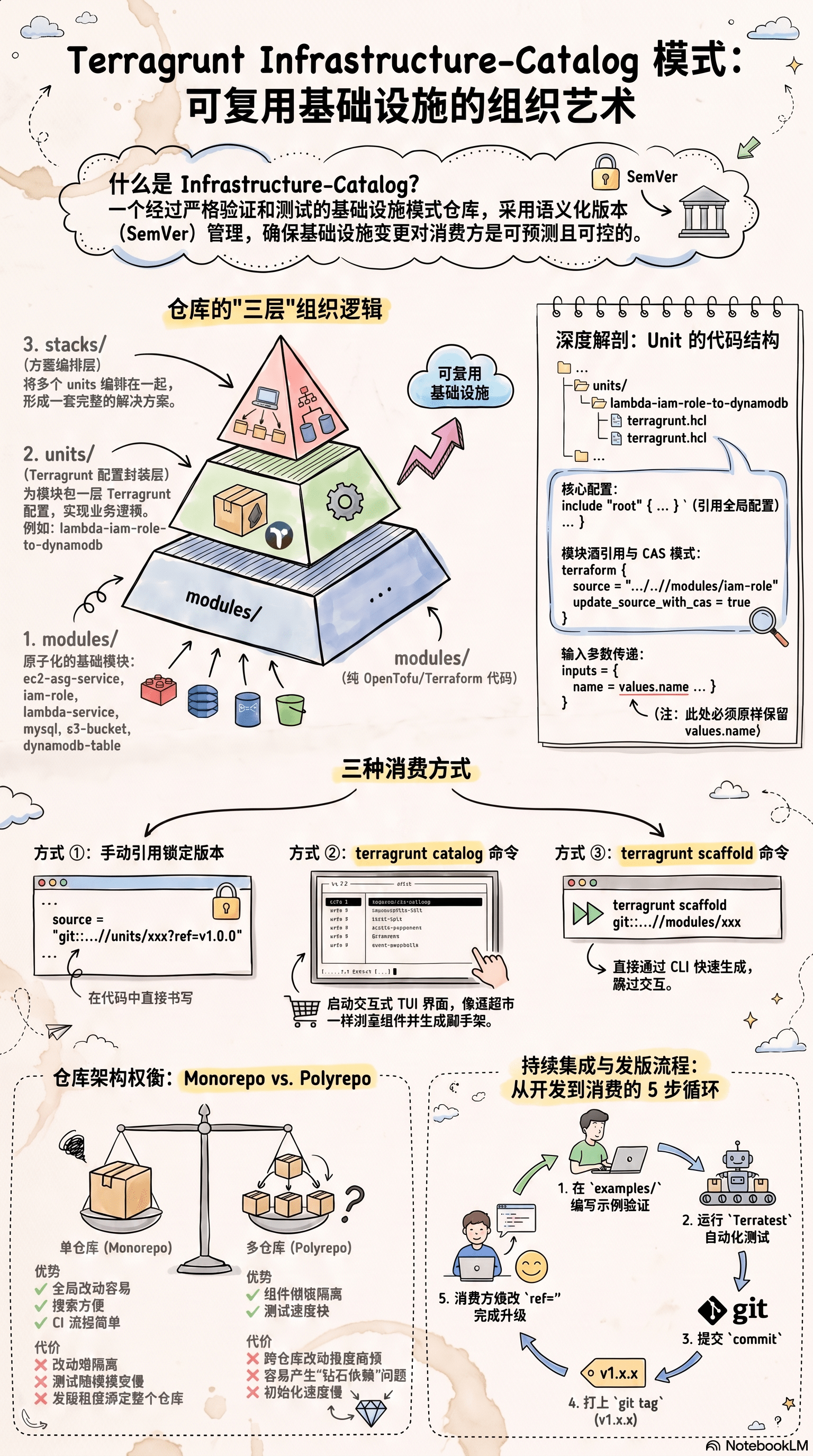
上一篇讲了 Infrastructure-Catalog——一堆经过验证的可复用基础设施模式,用 modules/units/stacks 组织,靠 git tag 版本化。但 catalog 只回答”能部署什么”,不回答”实际部署了什么”。后者是 Infrastructure-Live 仓库的职责,这一篇照着 Gruntwork 官方的 terragrunt-infrastructure-live-stacks-example 讲。
1. Infrastructure-Live 与 Infrastructure-Catalog 的分工
官方的定义很直接:
An
infrastructure-liverepository is a Gruntwork best practice for managing your “live” infrastructure. That is, the infrastructure that is actually provisioned, as opposed to infrastructure patterns that can be provisioned.
两个仓库配合的方式是:catalog 仓库里维护通用的 module/unit 模式,live 仓库里只放”引用 catalog 里哪个版本、传了什么参数”这些跟具体环境相关的配置,不直接写 Terraform/OpenTofu 代码。
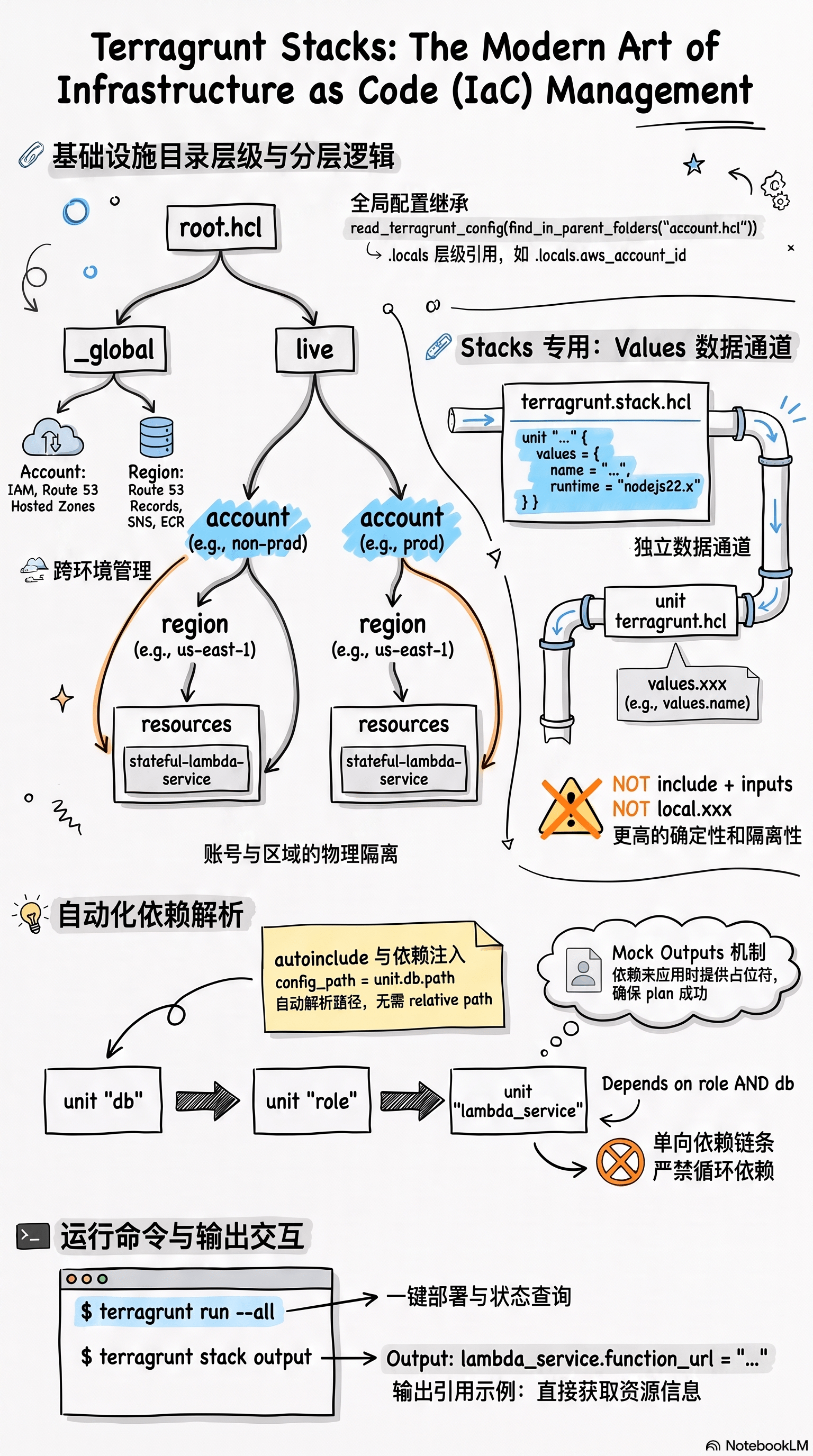
2. account → region → resources 分层
Live 仓库推荐按这个层级组织目录:
1 | account |
- account:对应一个云账号(比如
non-prod、prod); - region:对应一个云区域(比如
us-east-1); - resources:具体要管理的资源(比如
stateful-lambda-service)。
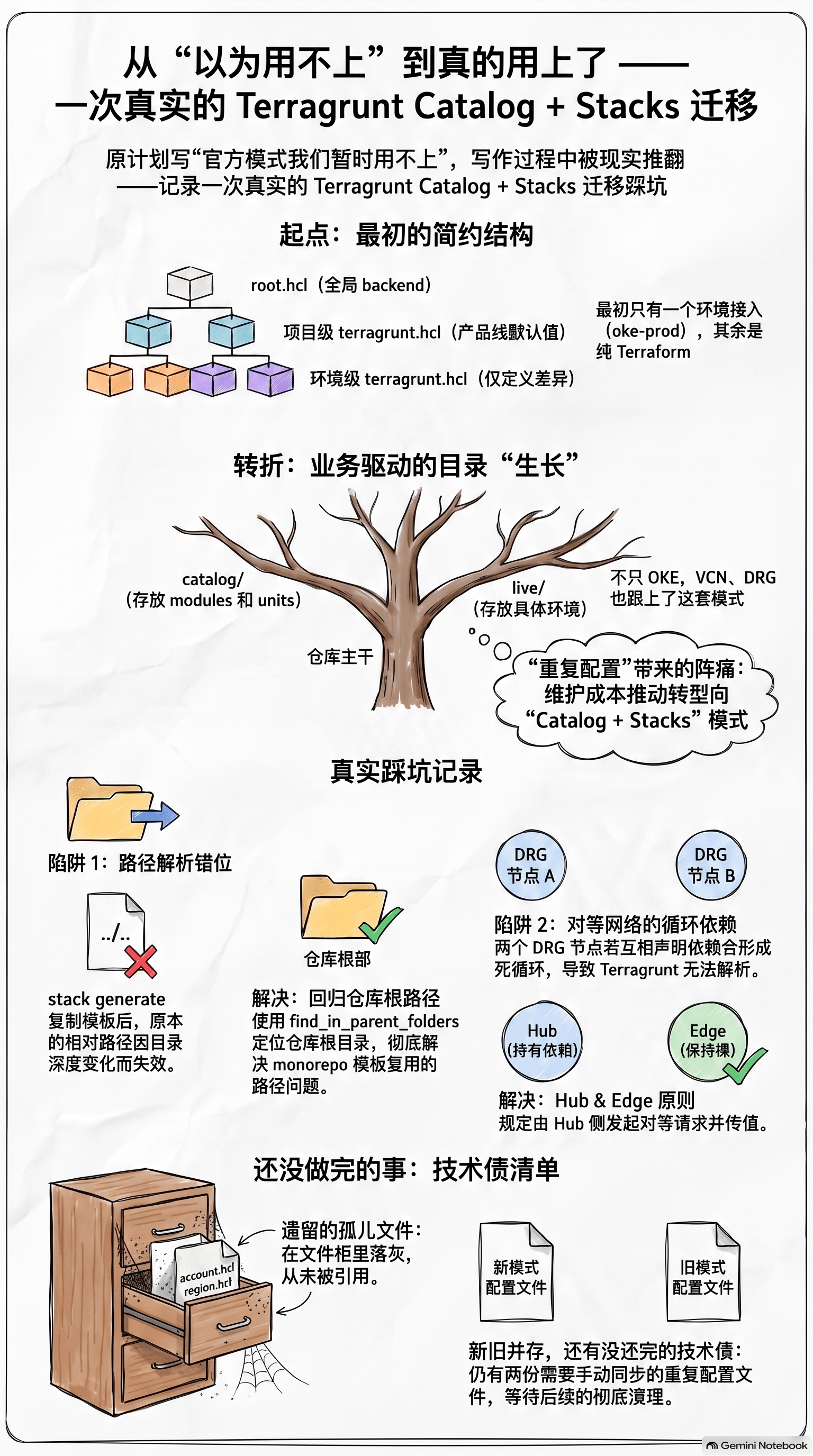
这个层级天然对齐了账号和区域的认证边界,也方便按账号/区域划分”爆炸半径”。如果一个团队在同一个云账号里管理多个环境(dev/staging/prod),可以在 region 下面再加一层 environment:
1 | account |
官方还提到一个 _global 目录的约定,用来管理”跨 region/environment 共享”的资源(比如账号级的 IAM 用户、region 级的 Route 53 记录):
1 | account |
3. account.hcl / region.hcl:怎么被 root.hcl 读取
non-prod/account.hcl 和 non-prod/us-east-1/region.hcl 各自只放一段 locals:
1 | # non-prod/account.hcl |
1 | # non-prod/us-east-1/region.hcl |
关键在 root.hcl 怎么把这两个文件的值”捞”出来用——注意这里不是 include,而是 read_terragrunt_config():
1 | locals { |
include 是用来合并一份完整 Terragrunt 单元配置的;而 account.hcl/region.hcl 只是”一堆共享 locals 的容器”,用 read_terragrunt_config() 单独读出来、按需取字段,语义上更准确。
4. terragrunt.stack.hcl:把多个 unit 编排成一个 stack
一个 stack 文件用 unit 块声明每个要一起管理的组件。以 non-prod/us-east-1/stateful-lambda-service/terragrunt.stack.hcl 为例(简化版):
1 | locals { |
两个关键机制:
values是独立于inputs的一条通道:unit块里写的values,会被对应 unit 自己的terragrunt.hcl以values.name、values.runtime这样的写法读取——上一篇lambda-iam-role-to-dynamodb那个 unit 里的values.name就是这么来的。autoinclude+dependency+unit.x.path:role依赖db,lambda_service依赖role和db,这些依赖关系直接写在 stack 文件里,config_path = unit.db.path会自动解析出db这个 unit 生成到的实际目录,不用手算相对路径(比如../../db)——db/role挪了目录,引用会自动跟着变。mock_outputs让plan阶段依赖还没创建时也能顺利跑通。这是 “stack dependencies” 特性,Terragrunt v1.1.0 及以上默认开启。
5. 怎么跑起来
在 stack 目录下:
1 | cd non-prod/us-east-1/stateful-lambda-service |
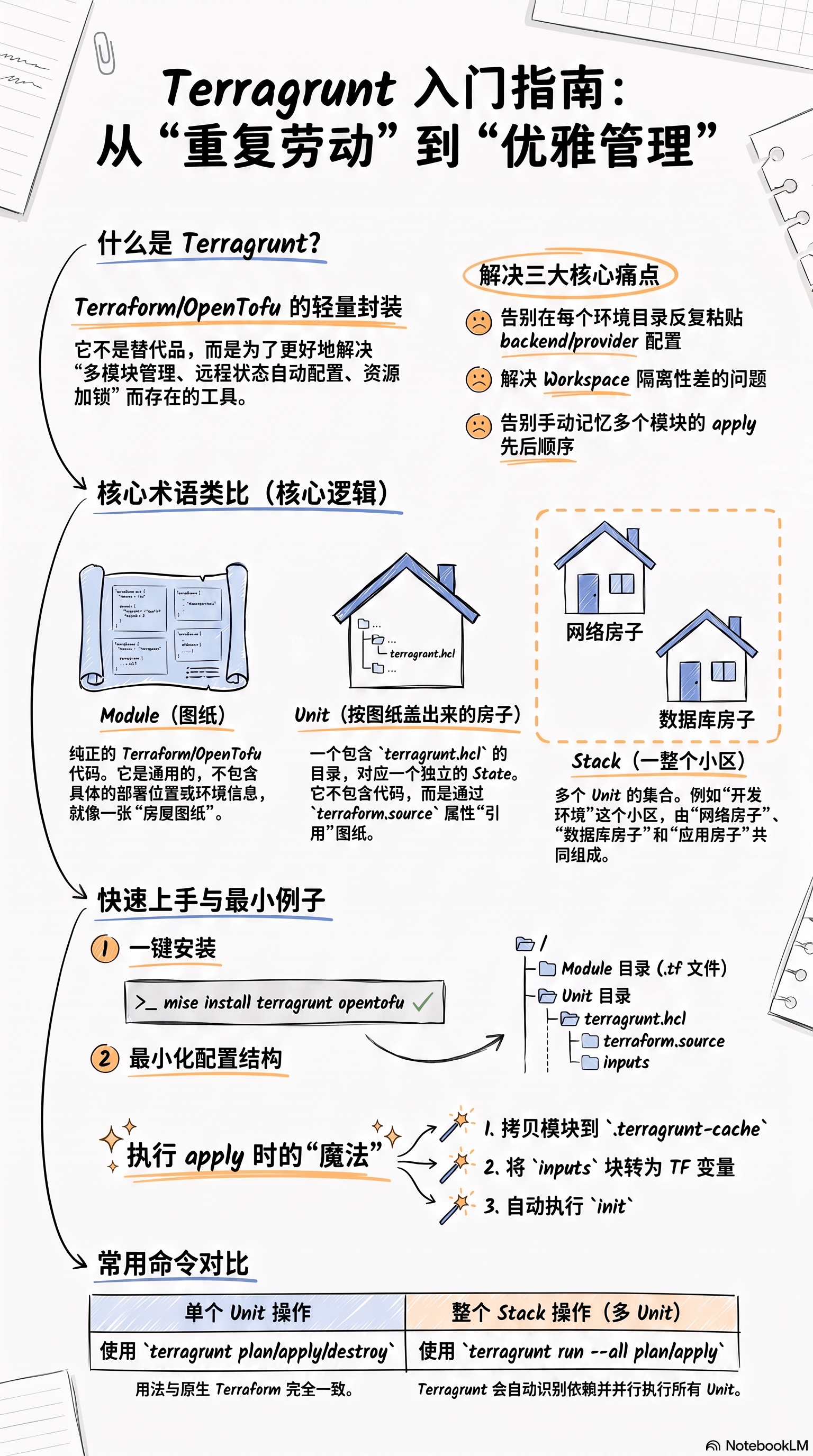
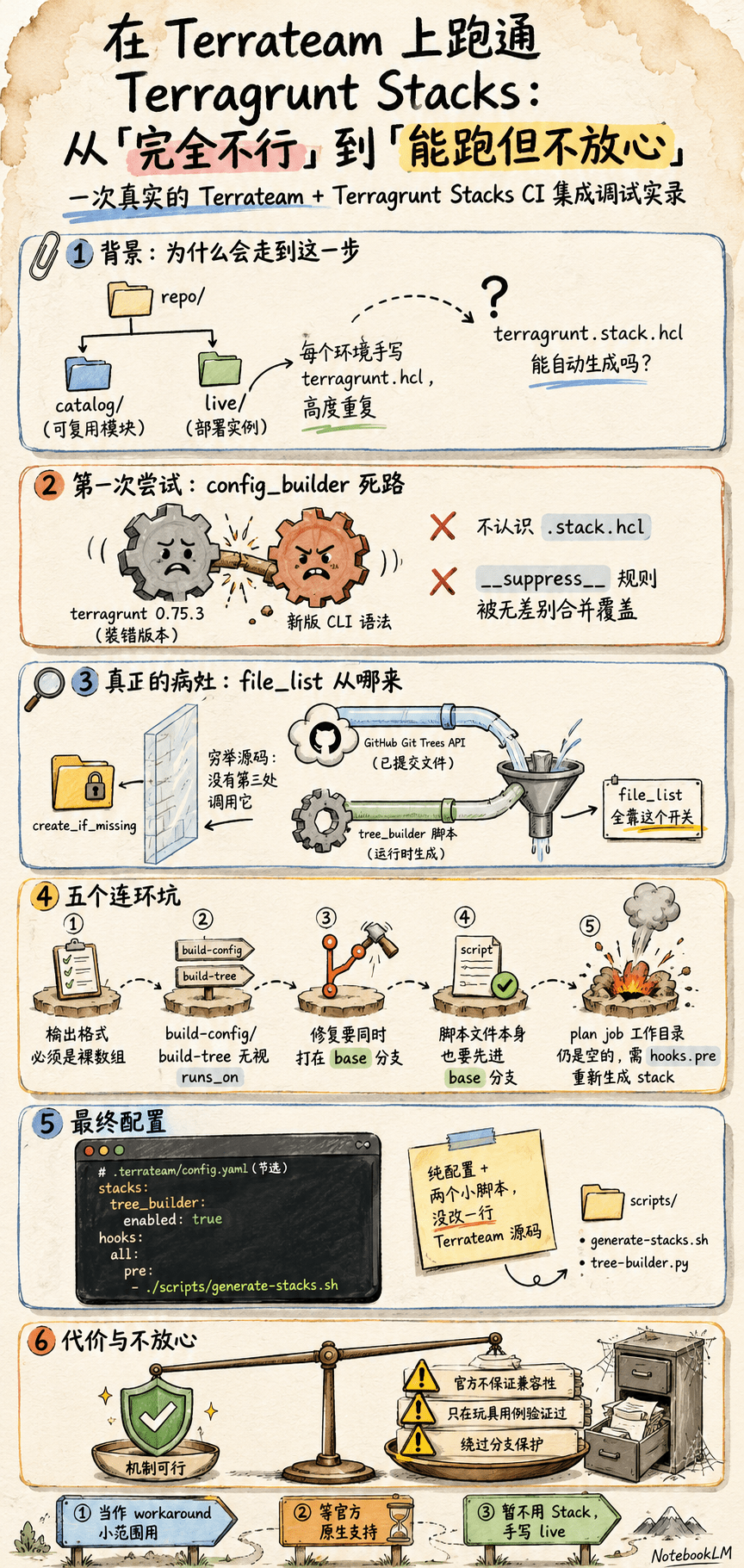
run --all 会先根据 terragrunt.stack.hcl 里声明的依赖关系生成一个 DAG,按正确顺序(db → role → lambda_service)执行。跑完之后,可以用 terragrunt stack output 一次性看到整个 stack 里所有 unit 的输出,按 “stack → unit → 输出名” 的层级组织:
1 | $ terragrunt stack output |
Infrastructure-Catalog 负责沉淀可复用模式,Infrastructure-Live 用 account/region 分层 + Stacks 负责把这些模式实际部署、管理依赖关系——这一套放在一起,是 Gruntwork 官方推荐的”能撑住任何规模”的组织方式。听起来很完整,最后一篇回到我们自己的 OKE 仓库,看看这些模式具体套上去,能用上几分、哪些暂时还用不上。